
How Textile Upcycling Enables New Business Models
Share
When I started collecting fabric scraps and sewing products from them, I thought: "This is just a nice hobby." Today I know that textile upcycling is much more; it's the basis for sustainable, creative business models that conserve resources and make economic sense at the same time. In this article, I explain what business models are possible through textile upcycling, why they represent a real competitive advantage for brands, and how you, as a founder or creative, can get started. I write from my own experience.
Why Upcycling Works as a Business Model
Textile upcycling is not only morally attractive but also economically sound. It reduces material costs, creates differentiation in the market, and appeals to customers who seek authenticity and sustainability. Unlike pure "fast fashion," upcycling often creates a product with a story, which increases willingness to pay and enables higher margins if you communicate the story correctly.
Furthermore, upcycling helps reduce dependence on global supply chains: local sourcing of leftover materials, short production routes, and flexible small series make many models more resilient to supply bottlenecks. And: sustainable practices are no longer a niche desire but an expectation of many buyers.
Typical Business Models Around Textile Upcycling
Here, I show you the models that I find exciting, from classic to experimental.
1. Product-Based Micro-Brand (Handmade & Limited)
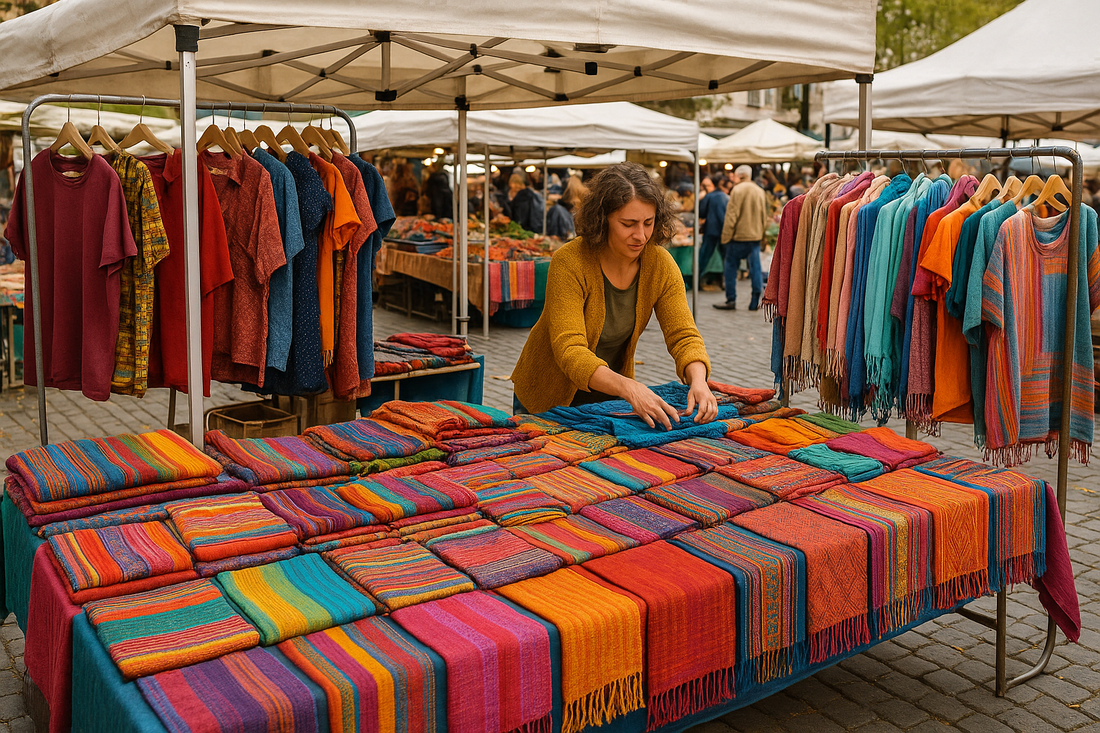
This is the classic model if you make makeup remover pads, pouches, or cosmetic bags from fabric scraps. You produce in small series or as unique pieces and sell directly to customers (online shop, markets, pop-ups). Important: a strong brand, high-quality photos, and honest storytelling.
Advantages: low start-up costs, high flexibility.
Challenge: scaling without compromising quality.
2. Subscription / Refill Boxes
Imagine a monthly subscription service: customers receive reusable everyday items made from upcycled materials, e.g., makeup remover pads, dishcloths, coffee filters. Subscriptions generate recurring revenue and allow for better production planning.
Advantages: stable income, customer loyalty.
Challenge: good logistics management and engaging content to retain customers.
3. B2B Partnerships & Corporate Gifts
Many companies are looking for sustainable promotional gifts or merchandise that conveys values. Upcycled products are perfect for small orders with a high story factor, personalized or with a logo.
Advantages: larger orders, more stable margins.
Challenge: production capacities and clear agreements on delivery times.
4. Take-Back Programs and Closed-Loop Services
You offer customers to take back old items and transform them into new products. This can work as a service with a discount for returns and greatly strengthens customer loyalty.
Advantages: free raw material sources, strong brand message.
Challenge: logistics and quality management for heterogeneous materials.
5. Workshops, Courses & DIY Kits
Offer workshops (offline or online) where people learn how to make products from leftover materials. Alternatively, you sell DIY kits with patterns and materials.
Advantages: additional income stream, community building.
6. Platform/Marketplace for Upcyclers
If you want to grow, you can build a platform that brings together producers and buyers of upcycled products, similar to a marketplace for sustainable goods.
Advantages: scalability, network effects.
Challenge: building trust, finding a fee model.
7. Repair and Refinement Services
Services such as repairs, redesigns (e.g., old shirt → new bag), or individual refinements (embroidery, appliques) create recurring contact with customers.
Advantages: low material costs, high added value.
Challenge: craftsmanship capacity and pricing.
How to Build a Sustainable Upcycling Business — Step by Step
I'll tell you the workflow I used in my first few months:
-
Secure Material Source: Look for local sewing shops, textile companies, or private households that donate leftover materials. Transparency pays off; tell the origin.
-
Test Prototypes: Develop 3–5 prototypes, test wearability, durability, and washability.
-
Costing & Pricing Strategy: Realistically calculate material, labor, and overhead costs. Upcycled products can justify higher prices if you deliver story + quality.
-
Brand & Story: Build a clear brand. Each batch should have a small story: what material, where from, who sewed it.
-
Choose Sales Channel: Start with an online shop + social media; add local markets or collaborations. You can pitch B2B offers to test customers in parallel.
-
Plan for Scaling: If demand increases, clarify whether you need more raw material or production assistance (sewers, collaborations).
- Sustainability Metrics: Measure and communicate concrete impact figures (e.g., kg of textile waste avoided). This strengthens credibility.
Challenges — and How to Solve Them
Every business model has hurdles. Here are the main pitfalls and my proposed solutions:
-
Heterogeneous Material: Different fabric qualities make series production difficult. Solution: define clear material categories (e.g., cotton, linen, mixed fabrics) and develop specific products for each category.
-
Scaling: Manual labor is difficult to scale. Solution: manufacturing partnerships, semi-automated processes (e.g., outsourced cutting), or limited collections.
-
Price Pressure: Customers compare with mass-produced goods. Solution: communicate value: durable, local, with a story.
- Legal & Labeling: For second-hand materials and hygiene questions (e.g., cosmetic articles), you must observe regulations. Solution: inform yourself in good time, document materials and care instructions meticulously.
Examples of Smart Products and Services (Concrete and Implementable)
-
"Starter set" of reusable household textiles: makeup remover pads, dishcloth, paper towel replacement, on subscription.
-
Personalized Corporate Gifts: Small linen bags with a logo, packed in a recycled box.
-
Limited Edition Drops: Patchwork bags made from designer remnants, numbered and with a certificate.
- Repair Bar at Events: Repair on-site, visible work — marketing and service in one.
KPIs & Metrics You Should Observe
To know if your model is working, look at:
-
Customer Acquisition Cost (CAC)
-
Customer Retention Rate / Subscription Churn (for subscriptions)
-
Contribution Margin per Product
-
Return Rate (more important for upcycling due to fit/size)
- Amount of textile waste saved (kg), a very good marketing tool
Conclusion — More Than Just a Trend
Textile upcycling is a real opportunity for creatives and entrepreneurs: it combines design, sustainability, and economic pragmatism. Those who build a business model around upcycling today are hitting two birds with one stone: they create value for customers and for the planet. And honestly, the work is incredibly fun too. Every seam feels a bit like a statement: against throwaway mentality, for quality, and for design to take responsibility.