
The Greatest Benefits of Local Value Creation for Society & the Environment
Share
When I think about the future, I don't see an anonymous industry without faces. I see small manufactories, urban gardens, and people working together to keep money, knowledge, and responsibility within their own region. For me, local value creation is not just an economic concept, but an attitude: a decision about how we do business, who benefits from it, and what traces we leave behind. In this blog, I explain the five most important advantages of local value creation for society and the environment.
1) Greater regional resilience, more robust communities against crises
Imagine your region has functioning supply chains, a variety of small producers and service providers, and a dense network of collaborations. This is not wishful thinking, but the core of resilience. Local value creation reduces dependence on distant production centers and global just-in-time systems, which quickly break down during crises.
Because goods travel shorter distances, supply gaps are rarer, and repairs or adjustments are possible more quickly. Local networks know each other personally. This ability to react flexibly is invaluable in times of climate shocks, geopolitical tensions, or supply bottlenecks.
2) Environmental relief through shorter transport routes & circular production
An advantage that many immediately understand: shorter transport routes mean fewer CO₂ emissions. But it goes even further. Local value creation often also promotes smaller, modular production methods that can be more easily adapted to circular design and local resource flows.
When raw materials are sourced as regionally as possible, not only does the transport-related CO₂ footprint decrease, but incentives for more sustainable material management often arise: return programs, regional recycling initiatives, or repair networks. Small businesses are often more flexible when it comes to environmentally friendly packaging, seasonal production, or the use of local residual materials.
Concrete example: Instead of shipping food across continents, local manufacturers rely on seasonality and short supply chains.
3) Stronger local jobs
Local value creation keeps value chains within the region and creates jobs that cannot be easily relocated abroad. This means more local employment opportunities, more income for local families, and more tax revenue for communities. Funds that can be reinvested in infrastructure, education, and social services.
This can make a real difference, especially for rural areas. When value chains are local, it's not just big cities that benefit: crafts, processing, and distribution offer diverse jobs with prospects. It also strengthens the professional culture, apprenticeships remain attractive, young people see opportunities on their doorstep, and emigration can be reduced.
In a nutshell: Local economies don't just mean business, they mean community building. Companies that produce locally create networks where profits and responsibility are shared.
4) Promotion of innovation and local know-how
This may sound surprising, but innovation often thrives better in dense, personal networks than in anonymous global structures. Local value creation generates encounters: producers, designers, scientists, and customers meet, exchange ideas, and iterate faster.
Small businesses are more flexible and quicker to try out innovations, be it in product design, material selection, or business models. Universities, craft businesses, and start-ups in a region can learn from each other and jointly develop scalable solutions that can later also be exported. The local experimental field thus becomes a breeding ground for scalable sustainability solutions.
Another effect: knowledge remains in the region. Skilled workers are not only attracted, they continue their education and pass on expertise to the next generation, which strengthens the innovative power of a region in the long term.
5) Greater transparency and stronger trust between producers and consumers
When products come from the region, supply chains are shorter and traceability is easier. Customers are more likely to know where something comes from, who made it, and under what conditions. This transparency creates trust and is an economic added value: people are willing to pay fairly if they know that producers are justly compensated and environmental standards are met.
Furthermore, transparency leads to a better feedback culture. Direct contact between customers and producers enables rapid quality improvements and genuine co-creation. The result is more durable products, better services, and often a stronger brand image for local players.
Practical example: A regional textile manufacturer receives direct feedback from its customer base, can adjust the material, and immediately analyze sales figures. This improves the product, with a direct impact on quality and customer satisfaction.
Common objections and why they often don't hold up
Of course, there's resistance. Here I briefly answer the most common objections:
-
"Local production is more expensive." Yes, that's true. However, local production convinces with craftsmanship and proven quality. Instead of buying new bedding every year, you buy high-quality bedding once and it lasts 10 years or longer.
-
"Economies of scale are better globally." For some products, that's true. Nevertheless, many areas such as food processing, furniture, textiles, and renewable technologies can be made economically viable locally or regionally, especially if you focus on quality, repairability, and circularity.
- "Local resources are limited." That's exactly why efficient use and circular economy are so important: less throwaway mentality, more recycling, and intelligent material selection.
Small steps, big impact, what you can do as a consumer
You might be thinking now: "Cool, but what can I actually do?" Here are five simple things that will have an immediate impact:
-
Buy consciously regionally, not necessarily more expensively, but more targeted: seasonal fruit, crafts, services.
-
Support local repair and exchange networks instead of buying everything new.
-
Ask specifically about origin in restaurants and shops, demand creates supply.
-
Get involved in neighborhood initiatives or local-buy groups.
-
Share knowledge: If you discover something good, talk about it on social media, which helps small businesses with little reach enormously.
These steps are small, but they bring money, trust, and attention back to the region.
More than just a trend: local value creation as a future strategy
Local value creation is not a nostalgic look back, but a pragmatic future strategy. It makes regions more resilient, relieves the environment, creates jobs, promotes innovation, and builds trust between people. For me, as someone who believes in a socially just and ecological economy, it is a tool to concretely shape change.
If you're looking for a starting point: consider a small, honest change in your daily life or in your company. Get local partners on board, test a regional product, or start a micro-project in your neighborhood. Small steps add up to a big movement, and it's this movement that shapes the future I want to live in.
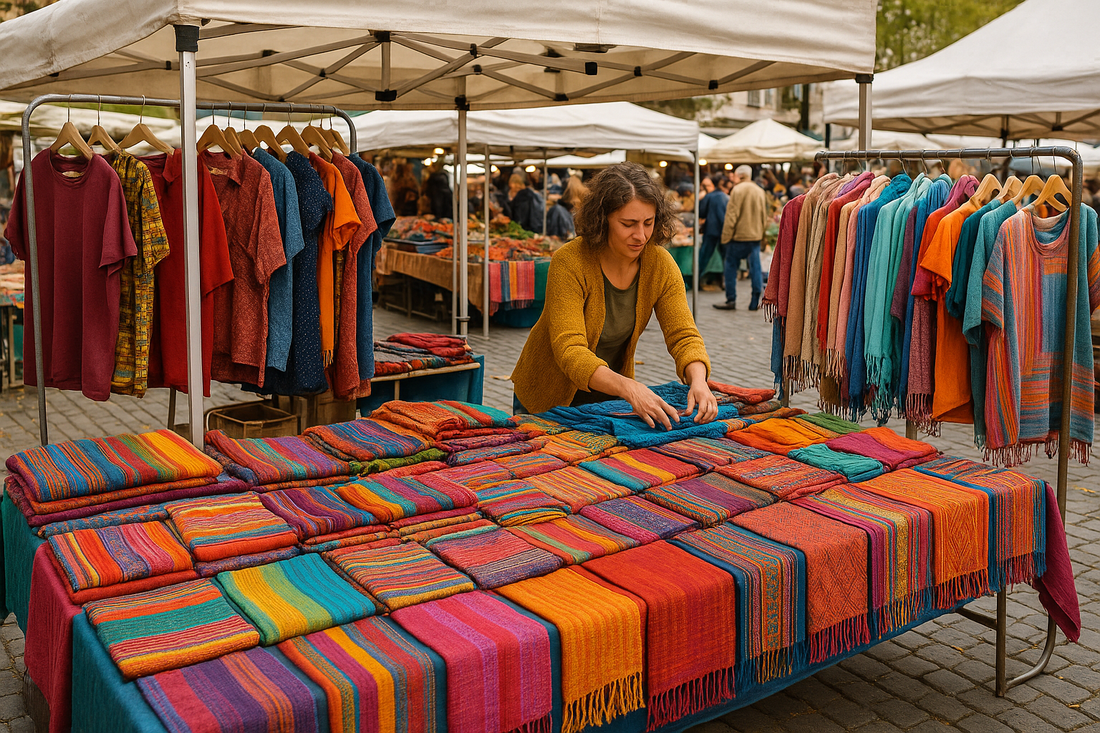
Photo by Andres Mora on Unsplash