
Why reusable textiles? 5 simple reasons to start now
Share
If you've been involved with sustainability or Zero Waste for a while, you've probably stumbled across the term "reusable textiles" at some point. Perhaps you first thought of classic cloth bags or those washable make-up remover pads that are popping up everywhere. But there's much more behind this idea: a quiet but powerful shift in how we consume and how we manage our resources.
I still remember the moment I first swapped my old sponge for a homemade fabric dishcloth. It was such a small step, and yet it felt right. Since then, I've understood: every reusable piece of fabric is a statement. And not just for the environment, but also for yourself.
In this post, I'll show you why it's worth starting with reusable textiles now.
1. Because disposables are simply too expensive – for all of us
Use once, throw away, buy new. This system only works at first glance. Because what we often forget when quickly reaching for disposable products are the hidden costs: resources, energy, transport, and disposal.
(More on this in the blog: "The True Costs of Waste")
In Germany alone, millions of tons of textile waste are generated annually. Much of it is avoidable. Old rags, kitchen towels, or cleaning sponges often consist of synthetic fibers that release microplastics when washed. These microplastics end up in rivers, lakes, and ultimately the sea via our wastewater systems, and eventually back on our plates.
Reusable textiles break this cycle. A linen cloth that you wash regularly and use for years causes only a fraction of the waste. Even when it reaches the end of its life, it can be composted or recycled.
The conclusion:
Disposables cost us not only money but also our future. Reusables mean taking responsibility and consuming consciously.
2. Because reusable textiles save resources – noticeably
What many underestimate: every thread counts. Cotton, linen, hemp, or recycled fibers – these are all materials that must be produced carefully. If we use them multiple times, we reduce the demand for new raw materials and thus conserve water, energy, and soil.
An example:
A conventional organic linen handkerchief can be washed over 500 times before it needs to be replaced. A paper tissue lasts exactly once and ends up in the trash. So imagine you only use your cloth handkerchief for one year. You not only save countless packs of paper, but also energy, water, and CO₂ generated during paper production.
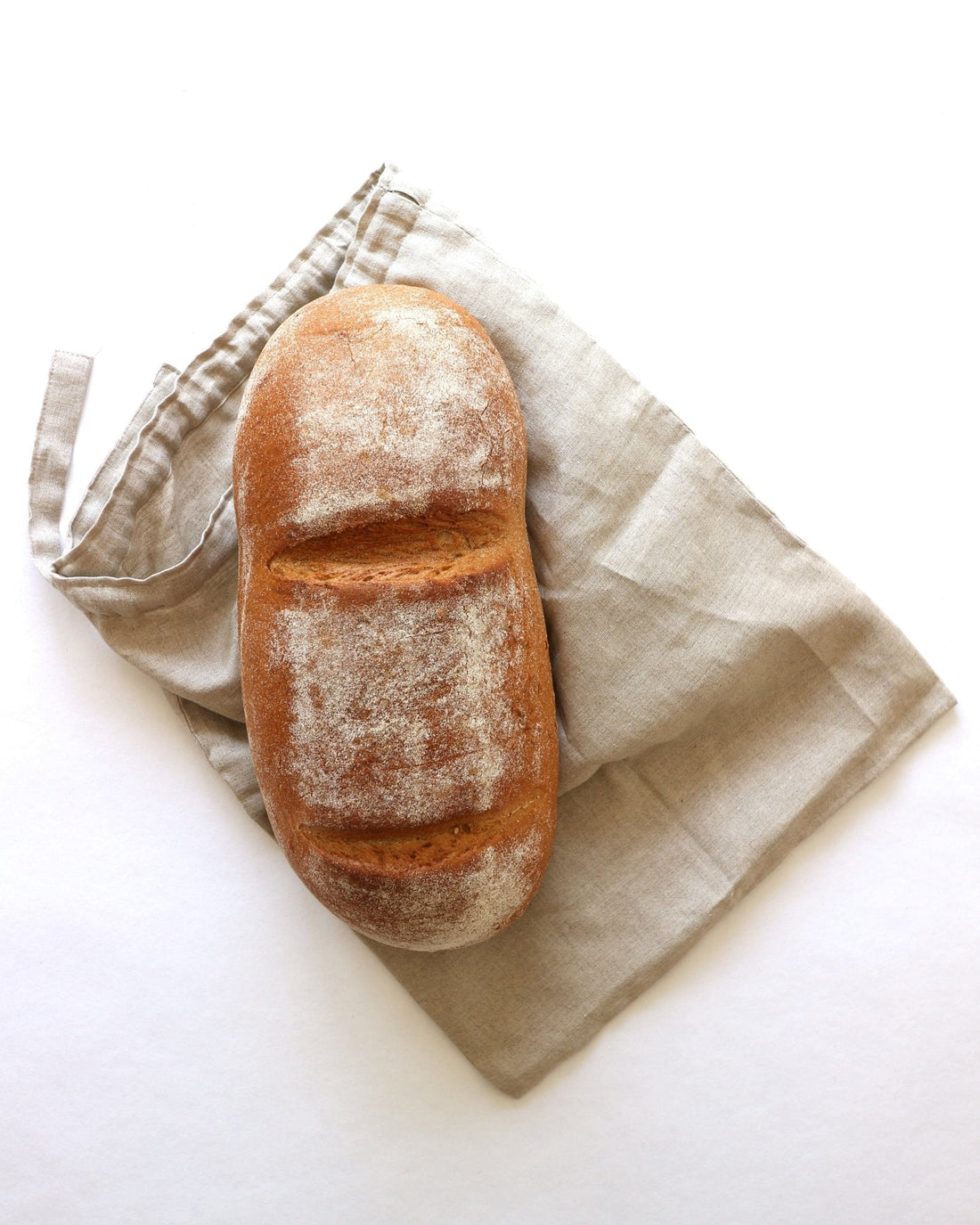
Textile remnants, such as those generated during sewing or cutting, can also be reintroduced into the cycle. Many small labels (like mine) collect these remnants to make make-up remover pads, bread bags, or coffee filters. This way, waste becomes a new, valuable product.
The beauty of it:
Sustainability becomes visible. You see and feel that your decisions actually make a difference. You'll notice it most in your trash can. It demonstrably fills up much slower.
3. Because reusables are cheaper in the long run
Sure, price plays a role. And yes, a reusable product often costs more at first glance. But that's exactly the point: we're used to consuming cheaply without thinking about a product's lifespan.
A set of reusable make-up remover pads might cost 17.90 euros. Disposable pads can be bought for a few euros. But after a few months, the money for the disposable products is gone, along with their packaging. The reusable set, however, will be used for years.
The same principle applies to dishcloths, bread bags, handkerchiefs, or cloth paper towels. They all pay for themselves after a short time because they are washable and durable.
A little food for thought:
If you save just 10 euros a month on disposable products, that's 120 euros a year. In five years, it's 600 euros. That's not just a number, that's a decision.
4. Because reusable textiles are creative, beautiful, and individual
Sustainability doesn't have to be boring – quite the opposite. It's colorful, personal, and fun! Many people who start with reusables suddenly rediscover their creative side. A few old fabric scraps? They become new make-up remover pads. A shirt that's too small? Perfect for a bread bag. An old towel? Becomes a dishcloth. Homemade or bought from small labels. Reusable products tell stories. They are unique items with character, not interchangeable disposable items. That's what makes them so special.
5. Because reusable textiles are a statement for a different future
Every decision in everyday life has an impact. And sometimes change begins exactly where it seems most inconspicuous, such as in our kitchen, bathroom, or laundry basket.
When you use reusables, you show that you care about the future. You send a signal to yourself, to your environment, and to the economy.
Because: demand creates supply. The more people choose sustainable alternatives, the more markets change. Producers react, new business models emerge, and sustainable business becomes the norm, not the exception.
Zero Waste is not a trend, but an attitude. Reusables are its practical expression.
What you can do concretely – your easy start to everyday reusables
Perhaps you're wondering now: where do I start?
Honestly – just where it feels right for you.
Here are a few ideas:
-
In the bathroom: Replace cotton pads and disposable wipes with washable fabric alternatives.
-
In the kitchen: Use cloth dishcloths, reusable coffee filters, and bread bags.
-
On the go: Always carry a linen bag or a lunch bag.
-
When shopping: Buy from small labels or secondhand. This promotes sustainable cycles.
Nobody expects perfection. Every step counts. And every step brings you closer to a more conscious, simpler lifestyle.
Conclusion: Why reusables are more than just a trend
Reusable textiles are more than sustainable products; they are an attitude, an awareness, and a form of self-responsibility.
They show that you've understood that "less waste" is not just a goal, but a path on which you learn to appreciate things again.
Once you start, you'll notice how your perspective changes. Suddenly, you no longer see fabric scraps as waste, but as material with a story.
You realize that you need less and at the same time have more: more quality, more mindfulness, more connection.
And that's perhaps the most beautiful reason why reusable textiles are so valuable:
They bring you back to a feeling for life that is real.
One that lasts.
🌿 To Take Away
5 Reasons for Reusable Textiles:
-
You save waste and protect the environment.
-
You conserve valuable resources.
-
You save money in the long run.
-
You promote creativity and individuality.
- You make a statement for a sustainable future.